

Electronics That Help Read the Water
A fish finder does not catch fish instead of the angler, but it quickly shows what cannot be seen from the bank or boat. It helps understand depth, bottom relief, holes, edges, snags, stone, vegetation, and fish in the water column. This is especially important on unfamiliar water, where several correct passes with a transducer save hours of random casting.
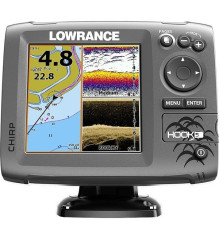
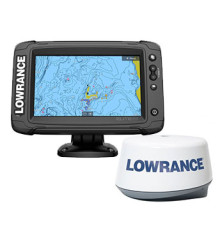
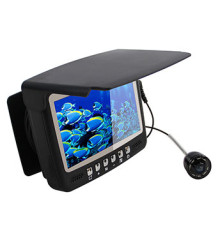
The FishMaster section includes fish finders and related equipment for different fishing formats: bank searching, boat fishing, trolling, winter fishing, and map work. The category includes Deeper, Praktik, Lowrance, and Simrad fish finders, batteries, CTEK chargers, boat and fish finder accessories, clamps, maps, underwater cameras, lights, charging stations, and radars.
Which Fish Finder Fits Your Fishing Style
Compact wireless models are convenient for bank fishing. They are cast with a rod, retrieved through the spot, and provide data on depth, water temperature, and bottom structure. This option is useful for spinning, feeder, and carp anglers when they need to quickly find a drop-off, shell bed, channel, or flat feeding area.
For a boat, anglers more often choose fixed or semi-fixed models with a screen, transom transducer, and battery power. Display size, image quality, GPS, chartplotter support, side scan, or down scan matter here. The larger the water and the more complex the relief, the more useful maps, saved waypoints, and the ability to return to a found edge or snag area become.
A beginner should get used to looking not only at fish icons, but also at the bottom line, bottom hardness, depth changes, and baitfish clouds. Often the combination of structure and food gives more information than a single mark on the screen.
Transducer, Mount and Power
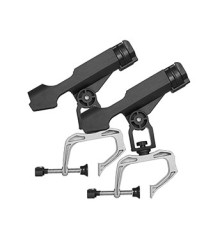
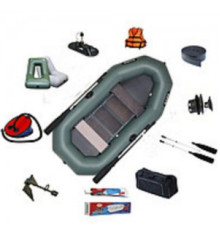
Fish finder quality depends not only on the unit itself. The transducer must be positioned correctly: without tilt, excess vibration, or air bubbles in the scanning zone. For boats, clamps, holders, and accessories are used to set the transducer at the right depth and remove it after fishing. This is convenient for PVC boats and kits that are often transported disassembled.
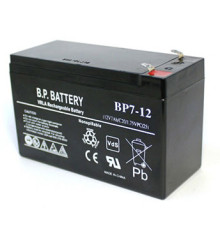
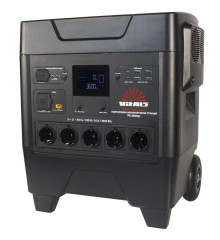
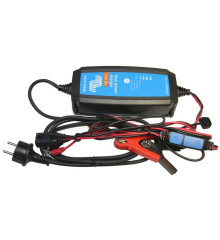
Power should also be planned in advance. A small unit needs only a compact battery, while a fish finder with a large screen, maps, and active scanning requires a larger energy reserve. For long trips, charging stations, spare batteries, and chargers that work correctly with the selected battery type are useful. If voltage drops, the screen may dim, the unit may restart, and data may be lost at the worst moment.
Maps, Cameras and Additional Devices
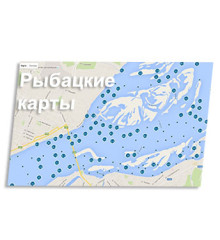
Maps help not only see the depth under the boat, but understand the whole fishing area. On large waters, they speed up the search for promising places: channel turns, flats, steep drops, and areas with changing depth. The angler can save waypoints, build a route, and return to found places without long searches by shoreline landmarks.
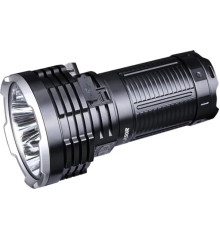
An underwater camera is useful where details must be seen: bottom condition, fish activity, lure reaction, grass, or debris. In winter, a camera helps check the hole and understand whether fish are under the spot, not only whether there is a mark on the screen. A light, radar, mounts, wires, and adapters may not look like the main purchases, but these small items often decide how convenient the whole system is on the water.
Check Compatibility Before Buying
Before ordering, decide where the equipment will be used: from the bank, from a PVC boat, from a motorboat, on ice in winter, or on large reservoirs. Screen, transducer, mount, power, and map requirements depend on this. For short trips, a compact kit is enough; for regular boat fishing, it is better to plan transducer installation, wire protection, and energy reserve right away.
It is useful to check several points in advance:
transducer type and mounting method;
battery and charger compatibility;
GPS, maps, and required scanning modes;
screen size and readability in sunlight;
moisture protection for the body, connectors, and wires.
At FishMaster, you can choose a fish finder, battery, charger, clamp, map, camera, or light for one working kit. If compatibility is unclear, it is better to clarify the boat model, transducer type, battery capacity, and fishing conditions before buying. This way, the equipment becomes not just a set of separate devices, but a clear system for finding fish and reading the water.