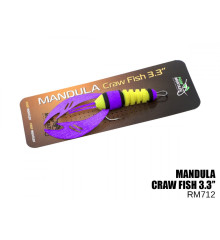
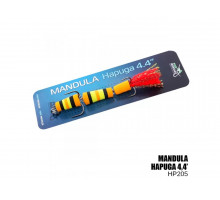
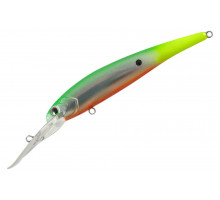
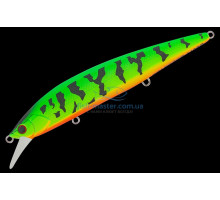
A mandula is a multi‐section bottom spinning lure with slight positive buoyancy, which during descent adopts a vertical posture and mimics a feeding fish. Thanks to its structure, it performs well on passive predators or in cold water when fish activity is low. Its distinct features include segmented body, two treble hooks and ability to combine different materials and shapes.
A mandula stands out in cool water, with low fish activity and on spots with moderate current or still water. Its slight buoyancy lets it hover just above the bottom, which attracts predators. It is also ideal for specific spots with clean bottom and minimal snags — places where conventional lures might get hung up.
Size is selected based on target species and fishing conditions: larger versions for pike or zander, smaller for perch. Material should provide the required buoyancy and durability — commonly EVA foam or foamed polyurethane. Colour depends on water clarity: in clear water use natural tones, in muddy water choose bright contrasting colours.
With a mandula, a common technique is step-retrieve or dragging: drop the lure to the bottom, give a short lift and a pause, then lift again and drop. With active fish use sharper jerks; with passive fish use slower action and long pauses. The angler must handle the rod sensitively and set the hook promptly, because the mandula works by subtle game and pause.
Advantages: high effectiveness when predators are inactive, ability to hover just above the bottom and an attractive silhouette. Limitations: not ideal for heavy snag or weed zones, requires precise tackle and sensitive hook-set. It’s important to choose spot and tackle considering mandula’s characteristics.
Enter your phone number
Product:
We will call you back and clarify the order details