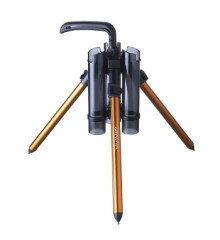
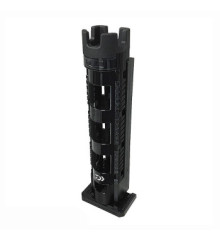
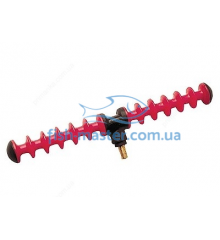
For simple float fishing, one rest is often enough. For bottom or feeder tackle, two support points are more convenient. One holds the butt, and the other supports the upper blank. This keeps the rod more stable and less affected by wind.
For a soft bank, a stick with a long sharp point is convenient. It goes deeper into the ground and holds better in sand or clay. A short rest may loosen after several bites. If the bank is loose, set the support at a slight angle.
A regular single bankstick works poorly on stones. It cannot be pushed securely into a hard surface. In such conditions, a tripod or another freestanding support is better. If the stones are small, you can look for soil between them, but stability must be checked every time.
Height depends on fishing style and the bank line. For feeder fishing, the tip must be visible and not hidden by grass. In current, lifting the line higher can be convenient. In strong wind, the rod is often set lower to reduce line drag.
Rests are best kept in a separate bag or case section. Sharp points can scratch blanks, reels, and boxes. After wet fishing, wipe the metal parts. If dirt stays on threads or clamps, adjustment becomes worse over time.
Enter your phone number
Product:
We will call you back and clarify the order details