

Exact Weight Instead of Guesswork
Fishing scales are needed not only for a trophy photo. They help understand the real fish weight, compare results from different trips, release the catch correctly after measuring, and avoid arguments about how much a pike, carp, or zander “probably weighed”. On the water, visual estimation is often wrong: a fish seems heavier after the fight and lighter after several minutes in a landing net.
Fishing scales are especially useful for anglers who keep notes on waters, compete, practice catch and release, or choose tackle for real fish size. Knowing the exact weight makes it easier to evaluate the rod, drag, leader, and hook, and to understand which spots more often produce larger fish.
Electronic, Mechanical and Grip Models
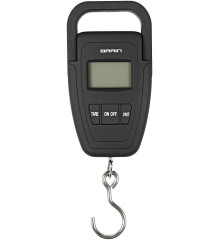
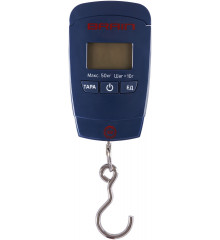
The most common option is an electronic model with a screen and hook. It is compact, shows the result quickly, and often has a tare function that subtracts the weight of a sling, bag, or landing net. Electronic fishing scales are convenient for carp, pike, zander, catfish, and any fish that must be weighed carefully and quickly.
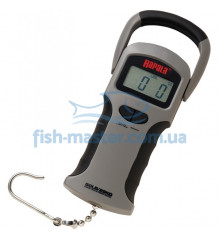
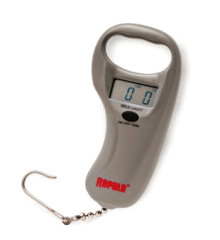
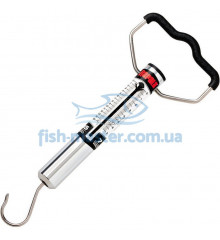
Mechanical models are simpler and do not depend on batteries, but they are usually less convenient for accurate measurement of small weights. A separate format is scales with a lip grip or clamp. They help hold a predator by the jaw, reduce hand contact with teeth and treble hooks, and then immediately show the weight. This option is convenient for boat and bank spinning.
Range, Accuracy and Use on the Water
Before buying fishing scales, decide which fish you weigh most often. For perch, trout, and smaller zander, accuracy at low values matters. For carp, pike, and catfish, maximum weight reserve is needed. If the device is rated too close to the expected trophy, it will work at its limit, reducing convenience and reliability.
Not only specifications matter, but also how the scales behave on the bank. The screen should be readable in sunlight, buttons should be pressable with wet fingers, the body should handle splashes, and the hook or grip should hold fish securely. For night fishing, display backlight is useful; for long trips, a clear battery type that is easy to replace matters.
The tare function is especially important for careful weighing. First, you can hang an empty sling or landing net, reset the reading, then place the fish inside and get the clean weight without extra calculations. If the device shows kilograms, pounds, and ounces, check the selected unit before measuring so the result is not confused in a log or report.
How to Weigh Fish Safely
Scales for fish should help measure the catch, not injure it. Large carp, grass carp, or silver carp are better weighed in a special sling or on a soft mat, not suspended only by the gills or lip. A predator can be fixed with a grip, but it should not be kept in the air longer than needed. The faster measuring and photo are done, the better the chance of releasing the trophy safely.
Before weighing, check:
enough load limit for your fish;
tare reset function;
hook, ring, or grip strength;
screen readability in sun and twilight;
battery condition before a long trip.
If the fish is slippery or actively fighting, prepare a landing net, mat, sling, or helper in advance. This makes weighing faster and reduces the risk of dropping the catch on the ground or damaging tackle.
After fishing, the body and hook should be wiped from water, slime, and sand. Electronics should not be stored wet in a closed bag: contacts oxidize faster, buttons start sticking, and the battery compartment can suffer from moisture. If the scales are rarely used, it is better to remove the battery before long storage.
Choosing for Your Fishing Format
For a spinning angler, compact fishing scales that fit into a bag pocket and can be reached with one hand are convenient. For carp fishing, higher load capacity, accuracy, a large hook, and work with a weigh sling matter more. For feeder and float fishing, a universal model is enough if it confidently shows weight in the needed range.
At FishMaster, you can buy fishing scales for bank, boat, carp, and spinning fishing. If a model is needed with delivery to Kyiv, Kharkiv, Odesa, or another city, the order is placed online across Ukraine. Fishing scale price depends on measuring range, accuracy, body type, backlight, grip, memory, and moisture protection. Choose not the most complicated device, but the one that is convenient for your fishing.